The Art of Bouncing Back: How to Stop Spiraling in Your Health & Fitness Journey

The truth is, it’s not the one late-night snack, the missed workout, or the stressful day that derails your progress — it’s what happens after.
Let me paint a familiar picture. You’ve had an emotional day. You tell yourself you’ll just have a small snack to relax, but it turns into more than you planned. You catch yourself thinking, “I knew I’d do this again. I’ll never change.” And then two things usually happen:
You keep going. “Might as well finish the bag now.”
Or, you swing to the other extreme: “Tomorrow, I’ll eat super clean, work out extra hard, and undo this.”
But neither of these actually help. Both come from the same place: guilt + fear (and you cannot build a sustainable and consistent routine rooted in these emotions).
Expect Imperfection
Here’s something I wish more people said out loud: When you’re building new habits (like healthier eating, consistent workouts, or a better relationship with food) you will have messy moments. Expect them. They’re not proof that you’re weak; they’re proof that you’re human. And here’s the part that really matters: if you want to see results, you’ll gradually become more and more consistent over time, but you can’t do that while stuck in cycles of pressure, coercion, or shame. Those patterns don’t build discipline; they just drain your energy and make every slip feel bigger than it is. Because consistency doesn’t mean doing everything right all the time. It means knowing how to bounce back quickly when you don’t.
The Moment You Catch Yourself
When you notice you’ve gone off track, pause. Take a breath. Instead of spiraling into shame or planning the next extreme fix, ask: “What’s actually going on here?” Maybe you were tired, emotional, or overwhelmed. Maybe you didn’t have a healthy option prepared, or you needed comfort and didn’t have another outlet. This moment isn’t for blame, it’s for curiosity.
Get Curious, Not Cruel
Being a tyrant with yourself doesn’t create discipline, it creates resistance and more distance from yourself. When you respond to slip-ups with harshness, you reinforce the same old neurological loop of punishment → rebellion. You push yourself too hard… then you snap back the other way. And that cycle never builds the lasting results you’re wanting. Every time you disconnect from yourself, it’s harder to get back on track.
If anything, it’s worth asking: “Has that approach actually worked so far?”
Curiosity, on the other hand, breaks the loop. It helps you understand what you needed in that moment and choose differently next time (without abandoning yourself in the process.)
Instead, speak to yourself the way you’d talk to a friend who’s struggling: “It’s okay. I see you. Let’s figure out what you needed in that moment.”
That’s not weakness. That’s wisdom.
Build Your “If–Then” Plan
Here’s a handy tool to help you be prepared for real life (because real life will happen.) There will be hormonal days where everything feels heavier, emotional days where you want comfort instead of kale, nights you barely sleep, and of course the days when your boss decides today is the perfect day to pile twice the workload on you.
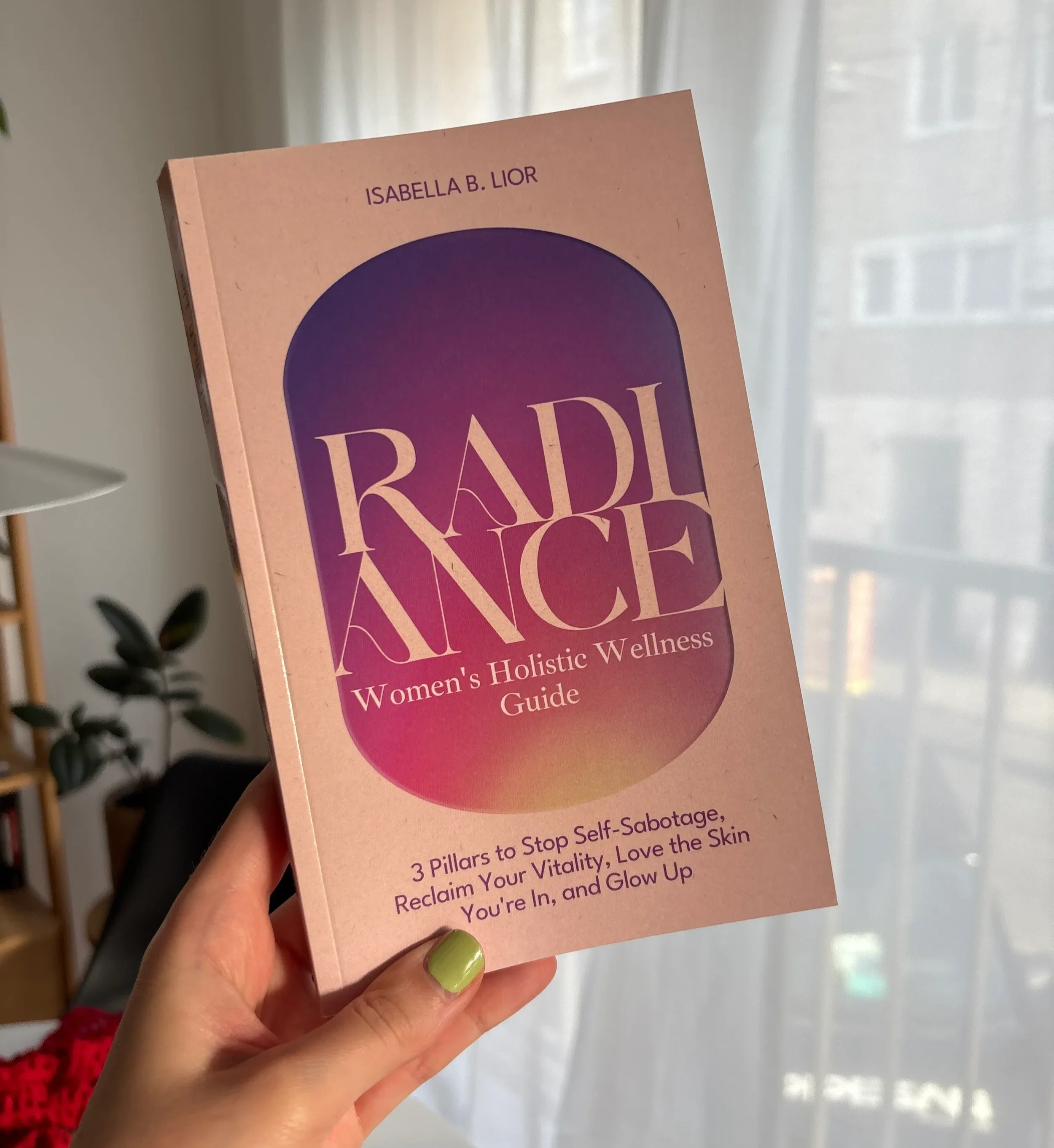
In those real-life moments, I use the If–Then Method, which I expand upon in the mindset section of my book Radiance. It’s simple: you create a small, realistic plan for when life doesn’t go according to plan.
For example:
If I skip my workout, I’ll do a 10-minute Pilates session or go for a 20-minute walk instead.
If I come home late and tired, I’ll have a prepped healthy meal ready to heat.
If I feel emotional and want to eat, I’ll take five minutes to journal or call someone I trust first.
These small systems are what come to your rescue on the days when good choices feel the hardest. And over time, with repetition, they become automatic… just like any other habit.
Systems Over Shame
When things go sideways, ask yourself: “What would have helped me handle this moment better?”
Maybe it’s keeping a few healthy comfort foods at home.
Maybe it’s scheduling workouts earlier in the day.
Maybe it’s having someone to talk to when you’re feeling low.
We don’t fall apart because we lack willpower. We fall apart because we lack systems and support.
And every time you reflect and make a small tweak, you’re not starting over. You’re upgrading your foundation.
The Art of Coming Back
Consistency isn’t about being perfect, it’s about recovering quickly.
It’s compassion and accountability working together. It’s the calm, grounded moment where you say, “Okay, that happened… and I’m still in this.”
Because here’s the truth: what derails most women isn’t the moment of overeating or skipping a workout, it’s the days or weeks of spiraling that follow. It’s the old internal stories that come rushing in: “See? You never stick to anything.” “You’ll always be this way.” “Why even try?” I call this the bully voice, the one that kicks you when you’re already down.
These loops reinforce the exact identity you’re trying to outgrow.
But the people who manage to stay consistent aren’t doing it because they’re magically stronger or more disciplined. They’ve simply learned to shut down those old stories right away. When you stop giving them oxygen, they stop running your life and identity. They simply bounce back before the spiral begins. They don’t let one slip turn into a storyline. They don’t negotiate with old beliefs. They acknowledge the moment, choose their next aligned action, and move on.
A slip doesn’t have to be heavy. You can simply say, “Oh well, I overate emotionally,” and then continue your day as planned, no punishment, no compensation, no drama.
Is it really that simple?
Yes. Most of the weight comes from the meaning we attach to the moment, not the moment itself.
When you cut the story and come back quickly, you stay connected to your routine, and that is what creates real, lasting consistency.
by Lior xo
🌸 Ready to Embody Your Future Self?
This post is inspired by the Mindset pillar from my book, Radiance: Women’s Holistic Wellness Guide — Three Pillars to Stop Self-Sabotage, Reclaim Your Vitality, Love the Skin You’re In, and Glow Up.
Inside, you’ll find:
Mindset tools for self-discipline and clarity — so you stop overthinking and start creating real change.
Practices for rewiring old beliefs — shifting your inner dialogue and embodying your confident, radiant self.
Soft discipline rituals — that help you stay consistent without the burnout or guilt.
Get your copy of Radiance and start building the mindset and habits your future self will thank you for.